Issues
From the Ground Up: The Power of LGBTQI+ Movement-Building
How Rainbow Railroad’s Crisis Response and Grassroots Mobilization Funds are empowering frontline organizations with funding assistance during a period of increased need.
5 min read
Important Issues in our Work
How Rainbow Railroad’s Crisis Response and Grassroots Mobilization Funds are empowering frontline organizations with funding assistance during a period of increased need.
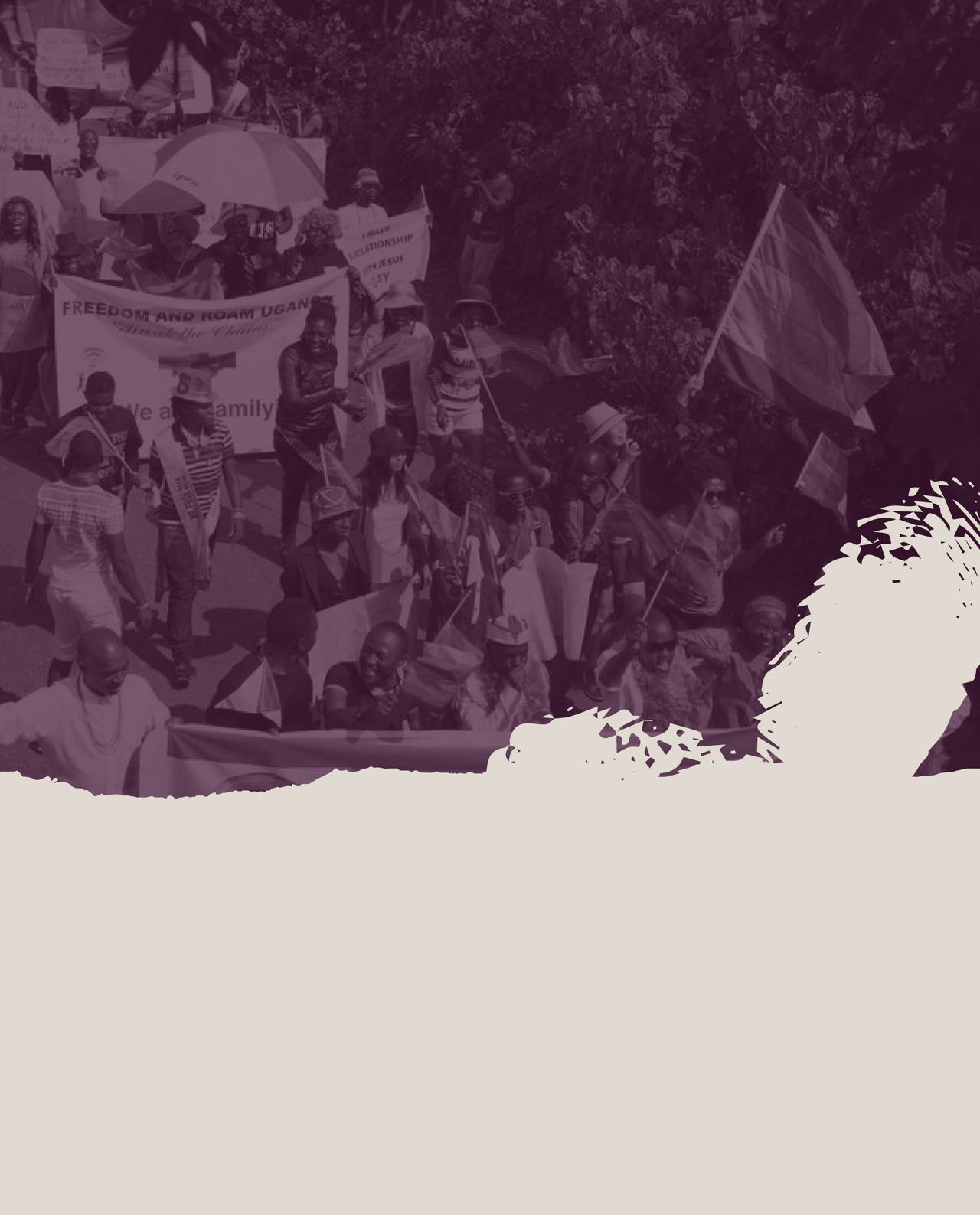
It has been almost three years since the Ugandan Anti-Homosexuality Act (AHA) was signed into law, representing one of the most extreme pieces of anti-LBGTQI+ legislation in the world. In that time, the global LGBTQI+ movement has witnessed a notable decline in support for LGBTQI+ rights and movement building across various democratic, legal and humanitarian protection systems. Rainbow Railroad has been closely monitoring the situation in Uganda; since the passing of the AHA, we have received over 3,450 requests for help from Ugandan citizens. In October, Rainbow Railroad hosted a meeting with representatives from Dignity Network Canada, a delegation of advocates opposed to the AHA, the Westminster Foundation for Democracy, and trusted partner Sexual Minorities Uganda (SMUG) to discuss the impacts of the bill on human rights defenders and LGBTQI+ persons in Uganda. The Anti-Homosexuality Act: The Continued Impact of Legislated HatredThe AHA seeks to prohibit any form of same-sex intimacy and its promotion or recognition. Prior to the passing of the AHA, same-sex intimacy was already criminalized in Uganda. The Penal Code 1950 criminalizes acts of carnal knowledge against the order of nature’ and ‘gross indecency’, colonial-era provisions which were retained after independence, and are punishable by life in prison. The United Nations Committee on the Elimination of Discrimination against Women ruled last year that criminalization of consensual, same-sex intimacy between women (and by extension, all people) is a human rights violation. Since the passing of the Anti-Homosexuality Act, these requests have grown exponentially with 291% increase compared to 2022. In 2023 alone, we witnessed a 2,057% surge in requests for Help from Uganda compared to the same period in 2022. Our advocacy has included the elevation of calls to action from Ugandan partners such as SMUG, with Canadian civil society and government representatives. Perspectives from the Ground: Coordinating with Local PartnersDuring the meetings hosted in October, our staff were briefed on the barriers faced by human rights defenders and the broader LGBTQI+ community since the passing of the bill. Partners described how violence towards the LGBTQI+ community remains disproportionately widespread across all systems. There has been a significant rise in the number of internally displaced LGBTQI+ persons due to forced eviction of LGBTQI+ people, which is mandated by the AHA. SMUG also described how global donors operating in Uganda have begun removing any informational materials related to LGBTQI+ care from their programming, a clear indication of how organizations offering LGBTQI+ services are forced to self-censor any LGBTQI+ content for fear of legal or political reprisal. Coupled with the recent cuts to USAID funding for humanitarian aid, many healthcare centers and clinics have been forced to shut down. This erasure means that many LGBTQI+ Ugandans are unable to access essential care with dignity and respectA representative from Westminster Foundation described how people perceived to be LGBTQI+ are subject to arbitrary arrests; they shared an example of three women who were detained for multiple days and subjected to forensic testing merely for their suspected affiliation with the LGBTQI+ community. One human rights defender described the bill’s far-reaching effects in portraying LGBTQI+ identity as a threat to the state. They explained how Ugandan LGBTQI+ people have been legally classified as an “aggravated circumstance” under multiple laws, including the HIV Control and Prevention Act and the amended Penal Code. The Future of the LGBTQI+ Movement Across AfricaThis pattern is not unique to Uganda. This year alone, we have witnessed similar developments across the African continent, notably in West Africa, where evangelical coalitions and political regimes are promoting anti-LBGTQI+ sentiment under the guise of moral protection. One of our experts provided a real-life example of how global actors continue to fuel anti-LGBTQI+ rhetoric by investing $40 million in establishing “African Centre for the Rehabilitation of LGBTQI+ Persons” effectively creating a conversion therapy institution.In early 2026, Ugandans will head to the polls for a general election. Activists and human rights defenders anticipate heightened arrests and expect that violence and political scapegoating of LGBTQI+ persons will continue to rise. Local LGBTQI+ grassroots organizations such as SMUG remain vital lifelines in providing support to displaced LGBTQI+ peopleA Global Call to ActionStrengthening international partnerships and elevating the calls of local human rights defenders is critical in the ongoing resistance to the anti-LBGTQI+ movement. As far-right and evangelical groups intensify radicalization efforts through political and religious systems, Rainbow Railroad continues to provide ongoing support to Uganda. We have fostered over 15 partnerships with grassroots LGBTQI+ organizations, and provided direct support to over 2,517 people, in the form of advocacy, livelihood assistance and shelter. We call on civil society and governments to continue to support the efforts of the LGBTQI+ movement in Uganda.Canadian Civil Society Organizations can support by: Pressing demand for broader sensitization and capacity building on LGBTQI+ issues, particularly through Know Your Rights workshops. There is an urgent need for sustained engagement with members of Parliament as well as enforcement agencies, acknowledging that many remain unaware of the lived realities and needs of queer communities. Both SMUG and Westminster Foundation have initiated targeted advocacy with MPs, including those involved in youth affairs.Ensuring that key advocates are “in the room,” informed of agendas and positioned to speak out is critical. For example, participation in forums such as the Family Values Conference has proven effective in influencing public opinion and challenging anti-rights narratives. Our guest shared how the lack of civic spaces to convene has an impact on the momentum of the LGBTQI+ movement. Since the passing of the AHA, avenues for human rights defenders and LGBTQI+ Ugandans people to convene have become nearly non-existent. Organizations cannot afford to ensure consistent representation. For example, only one delegate could attend the ILGA Conference instead of a broader delegation of 20 MPs and advocates. This restricts engagement in both global and local policy dialogues and undermines the visibility of queer rights advocacy in international fora.Producing shadow reports and coalition-led studies helps to amplify local realities and equip advocates with data to challenge existing discriminatory laws. invaluable in building momentum within the Ugandan LGBTQI movement, offering up practical tools for those on the ground.Engaging the private sector, especially large corporations in the global north. These entities can exert significant influence by publicly opposing regressive laws and adopting internal policies aligned with human rights principles.Encouraging the Government of Canada to mandate inclusive language and policy commitments in its international programming. Canada continues to act as both a convener and amplifier in global advocacy spaces and provides humanitarian assistance to LGBTQI+ movements.
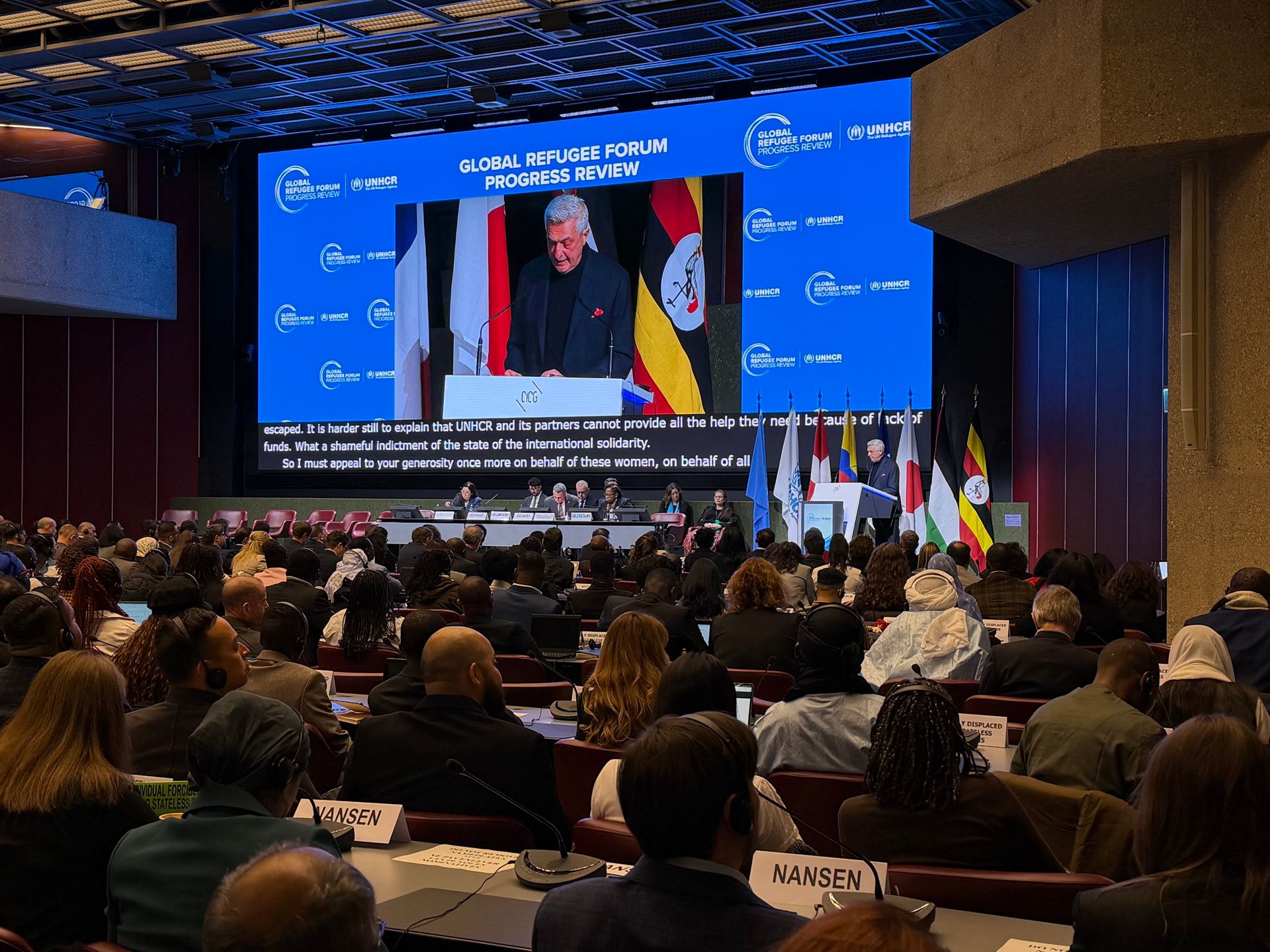
Rainbow Railroad is currently participating in the Global Refugee Forum (GRF) 2025 Progress Review in Geneva. The GRF marks a critical moment to maintain momentum and assess progress on pledges made in 2023 by states, non-profits, international non-governmental organizations, and private sector actors to protect refugees. Since the last GRF in 2023, the global humanitarian landscape has shifted dramatically. What began as a crisis shaped by the impacts of the COVID-19 pandemic has evolved into an overlapping polycrisis: the rise of anti-gender movements and authoritarian governance, shrinking humanitarian aid, and increasingly impenetrable borders. Together, these trends signal that refugee protection systems are being retooled not to help people survive forced displacement, but to prevent movement altogether. In this context, forcibly displaced LGBTQI+ people remain among those most at risk and most often left behind.Globally, wealthier countries host fewer refugees and continue to externalize asylum responsibilities, placing growing pressure on Global South countries to contain displacement, often without adequate resources or safeguards. These shifts have real consequences. In Canada, for example, recent migration reforms such as Bill C-12 - introduced as “integrity measures”- risk narrowing access to refugee protection and further disadvantaging LGBTQI+ refugees, whose claims already face heightened scrutiny and systemic barriers.Against this backdrop, Rainbow Railroad made seven pledges at the GRF in 2023, including commitments to carve out safer LGBTQI+ resettlement pathways, provide relocation support, and foster movement-building initiatives such as the Queer Forced Displacement Initiative. Central to this work is a commitment to LGBTQI+ refugee leadership, ensuring that forcibly displaced and stateless LGBTQI+ people have a meaningful voice in decisions that shape their lives, as well as ensuring that the needs and experiences of LGBTQI+ refugees are no longer invisible within global refugee systems.One of the clearest examples of progress we have made toward our pledges is the Government-Assisted Refugee partnership with the Canadian government—a landmark LGBTQI+-specific pathway allowing Rainbow Railroad to directly refer up to 250 at-risk LGBTQI+ refugees each year without requiring UNHCR recognition. Since the start of the year, 87 people have safely arrived in 16 cities across Canada. This demonstrates what is possible when political courage meets queer expertise. Additionally, through our Queer Forced Displacement Initiative and other movement-building programs, we have invested over $1M CAD in 80 organizations to address the root causes of LGBTQI+ forced displacement, protection and community integration support for queer and trans refugees.Despite this progress, at-risk LGBTQI+ people continue to be subjected to multiple forms of persecution—from discrimination to death, and shrinking access to resettlement pathways. Nearly half of Rainbow Railroad’s clients report surviving violence, including LGBTQI+ people living in refugee camps. And, the collapse of refugee resettlement pathways in the United States increased risk for LGBTQI+ people in life-threatening situations.As we look ahead to the Global Refugee Forum in 2027, Rainbow Railroad remains committed to investing in LGBTQI+ organizations globally, sustaining our data-driven and movement-building Queer Forced Displacement Initiative, expanding access to resettlement pathways for LGBTQI+ refugees, and providing cash assistance to at-risk LGBTQI+ people in their countries of residence.Rainbow Railroad continues to ensure that LGBTQI+ refugees are visible, protected, and supported within global refugee responses. As we take stock in Geneva, one principle must remain clear: “Ubuntu, I am because you are.” In that spirit, LGBTQI+ refugees cannot and will not be left behind. We call on our community to sustain these efforts and help us achieve our GRF pledge goals over the next two years in preparation for the next GRF in 2027. You can support by contributing to our 60in60 campaign, and echoing our call for governments to expand resettlement pathways for LGBTQI+ refugees.
-1280x1587.jpg)
We are currently living through a period of profound global regression. A coordinated anti-gender backlash is actively dismantling international human rights frameworks and fuelling forced displacement at unprecedented levels.In times of crisis, the needs of LGBTQI+ refugees are often invisibilized and overlooked within the design of both humanitarian and refugee protection systems. Rainbow Railroad works at the intersection of multiple and overlapping crises: climate collapse, political repression, armed conflict, and a dangerous rise in anti-LGBTQI+ hate. Each year, we receive tens of thousands of requests for assistance from LGBTQI+ individuals seeking urgent international protection.These requests are more than just cries for help. They are data. They reveal a troubling pattern, the convergence of democratic backsliding with rising anti-LGBTQI+ sentiments in places like Afghanistan, Ghana, Burkina Faso, Yemen, and Pakistan.This erosion is particularly dangerous for LGBTQI+ refugees living in transit countries, many of whom face criminalization, violence, and state-sponsored persecution. For many LGBTQI+ people impacted by forced displacement, third-country resettlement is not merely a legal mechanism; it is a vital means of protection. It is a lifeline. Yet last year, less than 5% of individuals seeking Rainbow Railroad’s assistance had UNHCR-registered refugee status.Standing in Brave SpacesAt Rainbow Railroad, we believe that building durable solutions for LGBTQI+ forced displacement begins with centering the expertise and stories of LGBTQI+ refugees at every stage of our advocacy.In June, Rainbow Railroad joined the Independent Expert on Sexual Orientation and Gender Identity (IE SOGI), Graeme Reid, for the release of his groundbreaking report on LGBTQI+ forced displacement at the 59th Session of the United Nations Human Rights Council (HRC) in Geneva.As a global advocate, Rainbow Railroad seeks to carve out spaces where LGBTQI+ refugees can directly advocate for and shape the design of inclusive humanitarian protection policies, expanding visibility and safety within systems that are, by design, exclusionaryIn co-sponsorship with ILGA World and with the support of the Group of Friends of the IE SOGI, we hosted a side event that brought together over 100 state representatives, activists, academics, individuals with lived experience, NGOs, and UN agencies for a dedicated dialogue on LGBTQI+ forced displacement. At the event we observed a noticeable gap left by the absence of the United States, which had previously held a strong leadership role in advancing protection for LGBTQI+ individuals and promoting diverse global interests. Rainbow Railroad was also able to leverage its consultative status with the UN Economic and Social Council (ECOSOC) to provide access to 17 individuals, enabling them to advocate for LGBTQI+ rights at the highest levels of the UN. ECOSOC status enables Rainbow Railroad and its partners to participate in nearly all major UN events, enabling opportunities for legitimate contributions to relevant subject matter.Leading from Lived ExperienceAmong the participants was Basel Hamrah, founding member and leader of Rainbow Refuge, a newcomer centre based in Edmonton, Alberta. Basel is an active member of the Canadian Council for Refugees and advocates for the transformative power of resettlement pathways. Basel’s story is emblematic of many people who have been impacted by forced displacement and who now serve in leadership roles within their communities. The creation of such side events provides a platform where LGBTQI+ advocates and allies can add value and depth to ongoing discussions on refugee protections while calling for concrete, sustained action to support forcibly displaced LGBTQI+ persons across all humanitarian protection mechanisms.As the queer movement faces growing repression, standing brave in contentious spaces is not only symbolic but also strategic. The renewal of the IE SOGI’s mandate ensures that this critical work, data collection, reporting, and advocacy can continue over the next three years. And with it, Rainbow Railroad renews its commitment to keeping the rights of forcibly displaced LGBTQI+ people and refugees at the centre of humanitarian and refugee protection systems.

On October 30, 2025, Rainbow Railroad was warned that the Russian government formally blocked access to the organization's website in keeping with the Supreme Court’s decision to classify the “International LGBTQI+ Movement” as an extremist organization. This decision is part of a decade of escalating repression, including the expansion of the 2013 “gay propaganda” law and the 2023 bans on gender-affirming healthcare, legal gender recognition, and family rights for transgender people. Any public discussion of sexual orientation or gender identity is now effectively criminalized. For more than a decade, Rainbow Railroad has intervened in Russia to protect at-risk LGBTQI+ Russians fleeing persecution. At the height of the anti-gay purge in Chechnya, Rainbow Railroad was among the first international organizations on the ground, supporting emergency evacuations and creating pathways to safety for LGBTQI+ people from Russia. Since the latest wave of anti-LGBTQI+ criminalization, Russia remains one of the top ten countries from which we receive requests for help. In 2023, at the height of the Russian and Ukraine war, we received 464 requests from Russia and facilitated 15 emergency relocations. To date, we have supported a total of 65 individuals at extreme risk to reach safer destinations in Argentina, France and Spain.What is unfolding in Russia does not exist in isolation. This campaign of repression is part of a wider global backlash. Just this year, Hungary adopted a new law criminalizing consensual same-sex relations and the so-called “promotion” of homosexuality. The same rhetoric of “protecting tradition” is being deployed across surrounding regions, such as Azerbaijan, to dismantle civil society and erase queer existence from public life.Since the start of Russia's full-scale invasion of Ukraine, many LGBTQI+ Russians have fled to neighbouring countries such as Armenia, Georgia, and Poland to escape conscription and repression, only to face renewed stigma and lack of legal protection as a result of their sexual orientation, gender identity and expression, and sex characteristics (SOGIESC). In this context, the banning of Rainbow Railroad’s website carries grave consequences. Its shutdown directly cuts off a critical gateway to refugee protection, particularly in a time when international sanctions have already narrowed options for safe exit, and the few remaining destinations where LGBTQI+ Russians can still enter, including Türkiye, remain unsafe for queer and trans people.For many forcibly displaced LGBTQI+ Russians, Rainbow Railroad’s website serves as a critical entry point to safety, access to vital information and assessment of protection options. As Pride symbols are outlawed, Russian civil society is silenced, and the already fragile LGBTQI+ civic space continues to shrink under state censorship. We call on the Canadian government and the European Union to act with urgency and principle by sustaining funding for human rights defenders and civil society organizations worldwide, and consider the following:Expand emergency visas and human rights defenders protection streams for LGBTQI+ Russians who have been forced into exile.Publicly condemn the instrumentalization of so-called “anti-extremism” laws to criminalize identity, suppress civic space and deter the Russian government's systemic assault on the rights of LGBTQI+ people.When access to information is cut, escape routes narrow. Invisibility is being weaponized against LGBTQI+ people in Russia, and silence from states only intensifies harm. Digital censorship is not symbolic; it is an authoritarian tactic that entraps and isolates LGBTQI+ people, increasing their exposure to violence, arbitrary detention, and forced displacement.Take 60 seconds today to support our 60in60 campaign and stand with LGBTQI+ refugees and asylum seekers.
Rainbow Railroad condemns a series of recent directives from the U.S. Citizenship and Immigration Services (USCIS) that further threaten asylum and refugee protections across the United States. Last week, a leaked memo from USCIS outlined plans to review over 230,000 refugees admitted between January 2021 and February 2025, and immediately halt the processing of all green card applications for refugees, as well as call for the full suspension of asylum case processing.Although the U.S. operates one of the most stringent refugee vetting processes of any resettlement country, it has also reinstated intrusive “turn back” practices that deny asylum seekers the right to apply for protection at its border. This dual attack on the cornerstone of U.S. humanitarian law will place LGBTQI+ asylum seekers at even greater risk as the doors to safety close. Under the previous administration, Rainbow Railroad — as the only LGBTQI+-led Private Sponsor Organization (PSO) in the U.S.— helped launch and operationalize the Welcome Corps Private Sponsorship Program. Through this program, we successfully resettled 42 LGBTQI+ refugees and served as a consultative partner to ensure queer competency was built into the program and shared as a best practice to other immigration organizations. In 2024, we advanced to third-party naming, which enabled direct LGBTQI+ referrals into the United States Refugee Admission Program (USRAP), a historic milestone for LGBTQI+ refugee resettlement. The current U.S. Administration’s anti-LBGTQI+ and anti-immigrant policies and rhetoric continue to dismantle these gains systematically. The indefinite suspension of refugee pathways, such as USRAP, coupled with the recent order to reopen finalized cases and freeze refugee protections, retraumatizes LGBTQI+ asylum seekers and refugees who face persecution, bias, and violence throughout their journeys to build safety.These orders will not only endanger LGBTQI+ asylum seekers and refugees within U.S borders, but will also have regional consequences. As U.S. refugee protections collapse, LGBTQI+ asylum seekers impacted by this policy regime will face a growing risk of recurrent displacement. With lawful pathways closing, many LGBTQI+ asylum seekers residing in the U.S. will be forced to seek out irregular pathways toward Canada in search of safety. Rainbow Railroad anticipates a growing demand for requests for help coming from LGBTQI+ asylum seekers seeking safety at the U.S.-Canada border who face heightened risk of arbitrary detention, misgendering, and accelerated asylum procedures that fail to account for the realities of SOGIESC-based persecution. The U.S. no longer functions as a rights-based democracy for those seeking protection, as mechanisms of accountability have been replaced by surveillance and “counter terrorism” frameworks that disproportionately target LGBTQI+, human rights defenders, and migrant communities. Operating within this hostile context, Rainbow Railroad continues to support queer and trans asylum seekers with cash assistance and through our Community Support Teams and Community Access Fund. We are committed to assisting at least 900 LGBTQI+ refugees and asylum seekers in the U.S. by the end of the year.Rainbow Railroad calls on our community of donors to sustain our work during this increasingly difficult time. A successful 60in60 campaign will enable us to support the most at-risk and affected individuals as we work to expand pathways to safety for forcibly displaced LGBTQI+ refugees at a moment of unprecedented need.
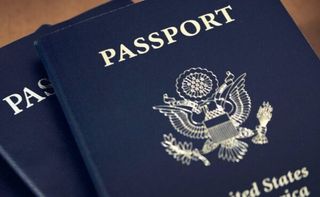
The global landscape for LGBTQI+ rights is shifting sharply as authoritarian ideologies gain power, transnational anti-rights coalitions deepen, and governments increasingly weaponize gender as a site of political control. This year alone, the transgender community has seen countries such as Cuba, Germany, and Sweden advance protections for gender-diverse people; these gains stand alongside an alarming wave of coordinated regression. Nowhere is this more evident than in the United States, where state-led efforts are actively dismantling transgender rights and reshaping public policy around the belief that gender is fixed at birth.In the United States, the elimination of the “X” gender marker on identity documents and the enforcement of Executive Order 14168 represent a profound rollback of federal recognition for transgender, non-binary, gender-diverse, and intersex people. This policy does more than impose a rigid male and female binary; it reframes transgender existence as a matter of national security. By casting gender diversity as a threat to public order, the U.S. government legitimizes heightened surveillance, secondary screening, and discretionary border control, targeting trans and gender-diverse travelers. For refugees fleeing gender-based persecution, this is not an abstract policy shift; being misgendered at a border crossing can trigger harassment, detention, or refoulement. For foreign nationals, including Canadians who hold “X” passports, this environment creates new barriers to safe mobility.These rollbacks dangerously intersect with Canada’s continued enforcement of the Safe Third Country Agreement (STCA). Despite overwhelming evidence that trans, non-binary, and intersex people face heightened discrimination and violence when forced to claim asylum in the United States, the STCA presumes the United States to be a safe country of refuge. This presumption no longer holds. Under current U.S. policy, LGBTQI+ asylum seekers—particularly those with diverse gender identities—risk being detained, misgendered, denied adequate protection, or fast-tracked through processes that fail to account for the complexities of SOGIESC-based persecution. Canada must urgently act by exempting trans, non-binary, and intersex asylum seekers from the STCA and ensuring they can seek safety without being pushed back into a system that increasingly treats their identities as security threats rather than grounds for protection.Forcibly displaced LGBTQI+ people already face heightened scrutiny due to their vulnerability, lack of documentation, and exposure to anti-LGBTQI+ persecution. When states recast gender diversity as a security risk, they create direct pathways to violence. Inaccurate identity documents increase the likelihood of being misgendered in detention, denied entry at borders, or placed in unsafe facilities.Rainbow Railroad is calling on civil society to defend gender-diverse documentation rights and to oppose policies grounded in a rigid, birth-based definition of gender. We call on the government of Canada to continue recognizing “X” markers and protect the mobility of those whose identities fall outside imposed binaries by exempting trans, non-binary, and intersex asylum seekers from the STCA to prevent refoulement into danger.Safe mobility is not a privilege; it is a right that must be protected.

Bill C-12 has the potential to endanger the lives of LGBTQI+ people fleeing persecution.

Rainbow Railroad's response to the delivery of the 2025 Canadian Federal Budget.
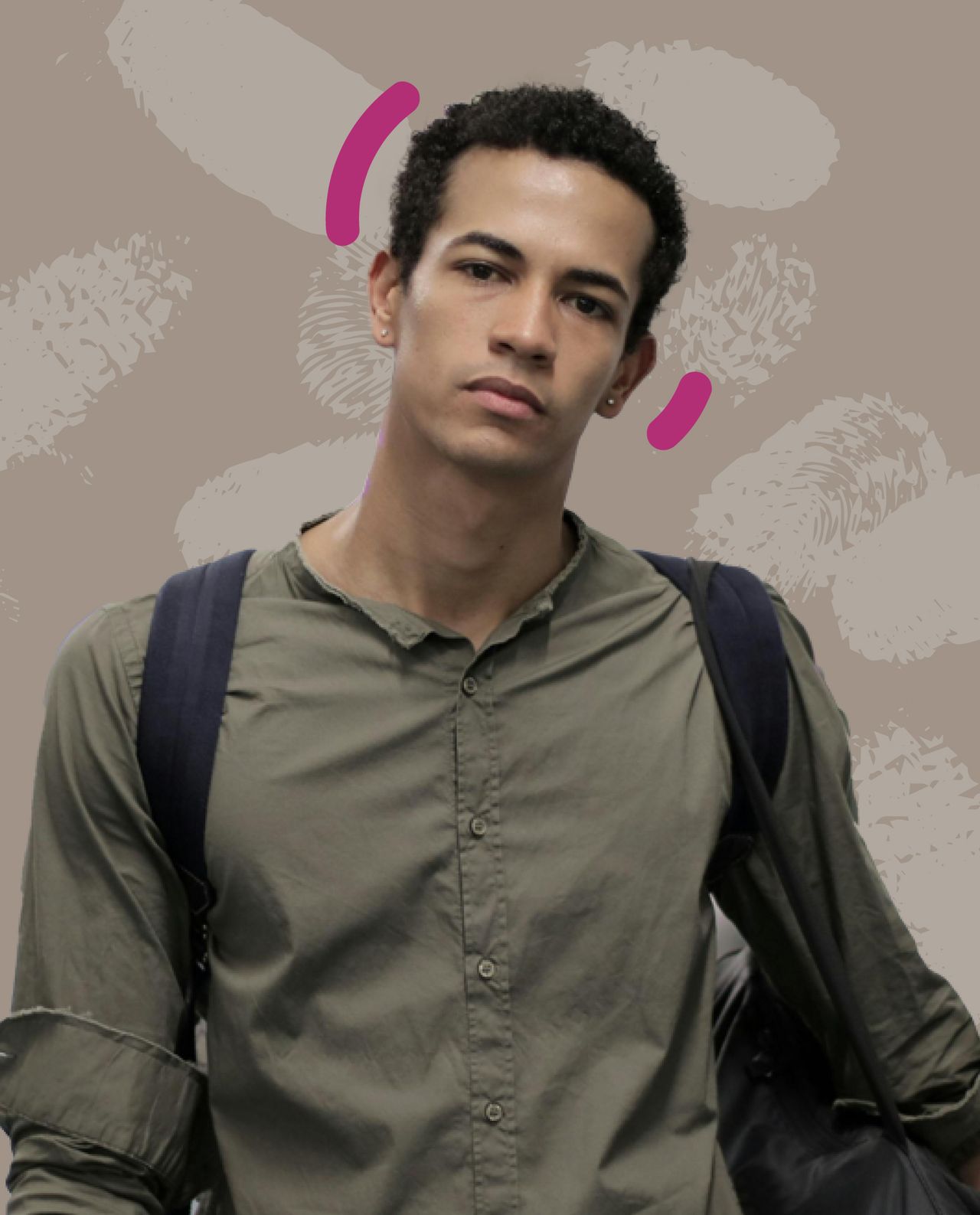
“There is a great sense of responsibility in being the recipient of someone’s story,” explains Derek, a Program Officer for Intake.
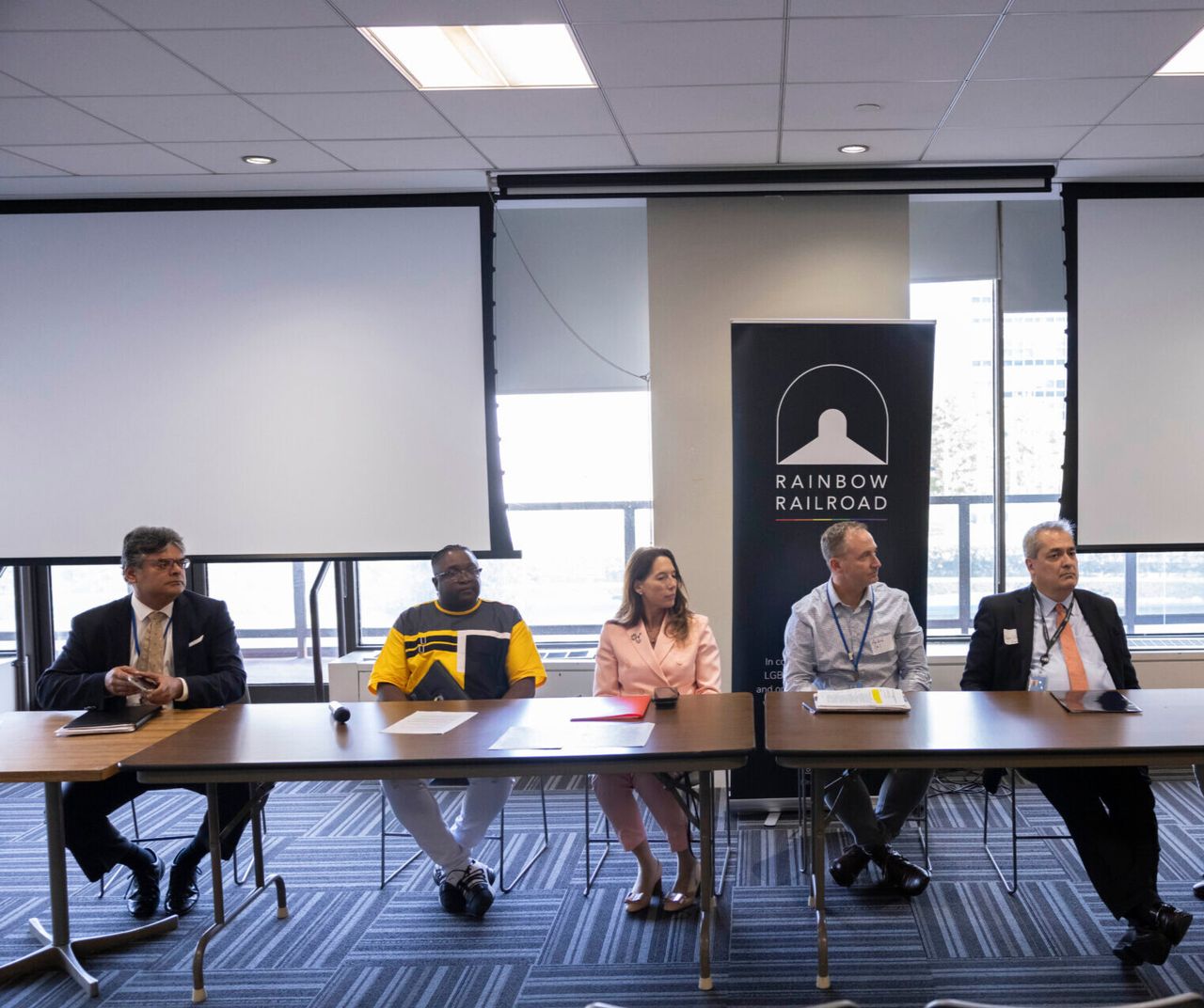
Where direct service programming cannot meet the need, we advocate globally for systemic change to address the root causes endangering and displacing LGBTQI+ persons around the world.
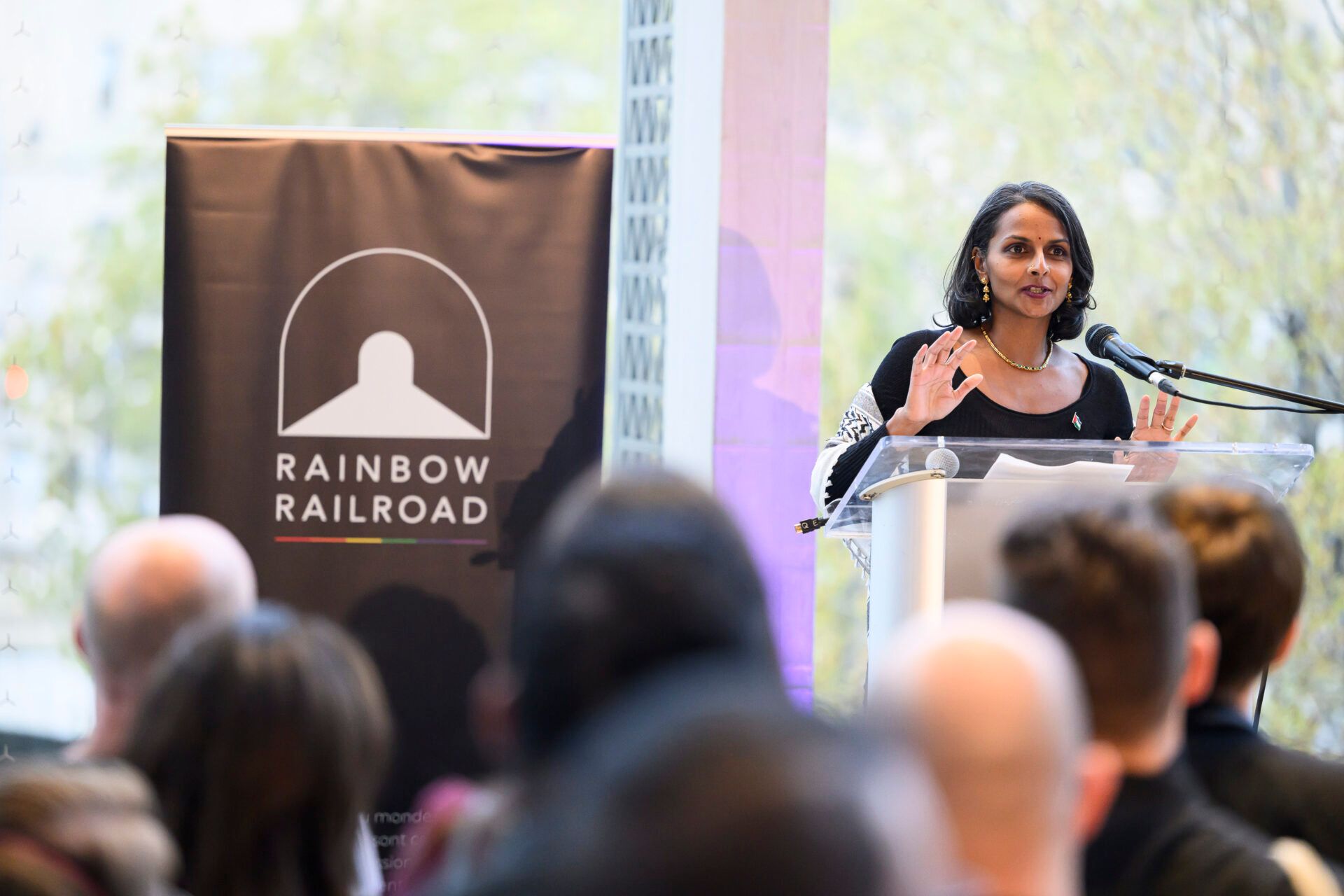
In 2024, Rainbow Railroad launched the Queer Forced Displacement Initiative (QFDI), a two-year project to establish an international multi-stakeholder network to improve access to protection and durable solutions for LGBTQI+ FDPs.